President William Ruto has said the removal of subsidies and other painful measures taken soon after he became head of state were necessary steps to stop Kenya from falling into a debt crisis.
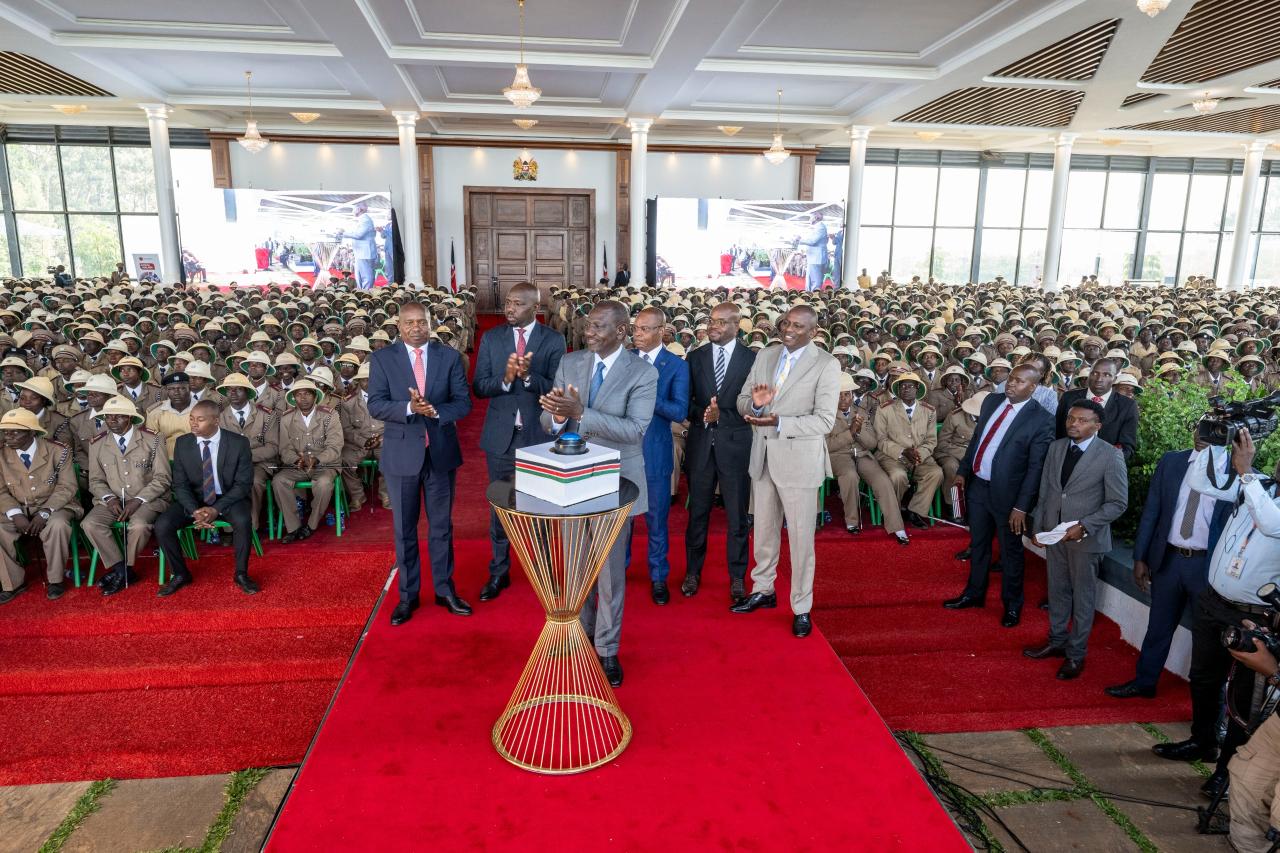
He made the remarks at State House on Tuesday during the presentation of the Jukwaa la Usalama report, using the platform to explain why he chose a path that drew heavy criticism at the time.
Addressing security officials who were part of the forum, Ruto said he felt obliged to be open with the country about the state of the economy he inherited.
“There is a job you people gave me to be the President of Kenya, and that work, I want to address you about it,” he said. “When someone is given work, they must do the work.”
He noted that meetings under the Jukwaa la Usalama programme often appear like political gatherings, but the intention was to provide a space where community leaders could freely share their experiences on safety and public order.
“Ordinarily, these gatherings are for politics, but we said we wanted a gathering of Kenyans to talk about issues of security,” he said. “I thank you for coming out and talking to us without any barriers.”
Ruto said that when he took office the country was already facing heavy pressure, pointing to rising inflation, a sliding currency and low reserves.
“We had debts, inflation was 9.6 per cent, the dollar had gone to 167, and our foreign reserves had gone down to 5.7 billion dollars,” he said.
He recalled a discussion he had with United Nations Secretary-General Antonio Guterres, who had expressed concern about what Kenya would do if it was unable to meet its debt obligations.
“I told him Kenya will not be defeated. I came back and sat in my office, and we said we cannot be the country that is going to go to shame and default on our debts,” he said.
To avoid such an outcome, Ruto said he approved changes that were tough and unpopular but necessary to protect the country from default.
“I had to make very difficult decisions, and we removed subsidies; we removed the fuel subsidy, the flour subsidy, and I was forced to stop paying some debts so that we did not falter,” he said.
“I did all these, but they were difficult and very sad decisions.”
He said the decisions were made out of responsibility, even though many people did not agree with them at the time.
“I take my job very seriously. You understand me, and that is why sometimes it is good to hear from the horse’s mouth,” he said.
Ruto noted that while several countries defaulted on their sovereign loans last year, Kenya did not, and he believes the steps taken early in his term played a key role.
“During that time, it was said that six countries would find it hard to pay their debts,” he said. “Out of those six, five defaulted — but Kenya did not.”
He concluded that the economy is now more stable, saying the firm decisions he took helped place the country on a better path.
“Today, I can confidently tell you that our economy is on a sound footing,” he said. “If I had not made those hard decisions, we would have been put to shame.”



























Comments
Sign in with Google to comment, reply, and like comments.
Continue with Google